So I'm groovin' to the funky latin beat of Los Hombres Calientes, Vol. 2
 adds Wenda.
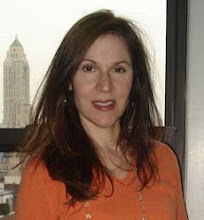
We heard more on the subject at the next panel, "Advertising, Ad Networks and Other Revenue Opportunties". Lisa Stone, CEO of BlogHer (that's her next to yours truly), shared how her company started out as a conference and has now become a full fledged organization that offers an ad network to its members but maintain high standards. "We have advertising guidelines that forbid pay-per-post and we request that bloggers bring in the best content for women", she says. As Lisa puts it, their members didn't want to write for magazines or newspapers, they wanted to write for themselves (here's to blogger's independence!), and BlogHer is providing a way for them to monetize their work. She sees a very positive future for ad networks.
Up next it was two media powerhouses: Cathie Black, Pres., Hearst Magazines, being interviewed by Tina Brown, back at work with the launch of her new Daily Beast. Tina Brown made a catty remark about being in magazine publishing in this environment (meow...I guess she learned her lesson...), which was blogged about in this piece on PaidContent.com.
The highlight of the panel that followed, which was on M&A and venture capital activity, was seeing Andrew Shue in the flesh, cute as ever. Yeah, that Andrew Shue. From Melrose Place. Elizabeth's brother. He is co-founder of CafeMom, an online community for mommies, although apparently he hasn't left Hollywood altogether. When he introduced himself he said he was formerly with D&D Advertising, and the whole room chuckled. I had to ask one of my table mates what he meant, and she quickly clarified that was the fictional company he worked for in the series (ok, he's cute and has a sense of humor).
The other big thrill was listening to blogger extraordinaire Heather Armstrong tell her story. She started her blog Dooce when she was single, thinking that only a handful of friends (and, as she puts it, a few guys she slept with) would read it. She would complain about her job and call her  boss names, for which she subsequently got fired. Heather later got married and had a baby, so her posts became about the isolation that new moms go through and her own struggles with post partum depression. The beauty of it was that new mommies all over the country were sharing her same angst and, through her, found a voice for what they were feeling. Page views went through the roof, to the point where Dooce now supports her whole family. Her experience really inspired me to keep writing, and more often. Hope it does for you too. Blog on!
Comments? Thoughts? If you liked this post please share it with your friends by clicking one of the social bookmarking links below.
Thursday, October 30, 2008
EconWomen Conference - Part 2

Wednesday, October 29, 2008
EconWomen Conference, New York
 It's 1:30pm and I haven't had lunch so I'm trying to make a healthy choice from the sumptuous array of sweets at the EconWomen Conference, where a who's who of women in media are converging for an afternoon of kick-ass panels. I opt for the fruits and nuts but also sneak in a few of the checkered shortbread cookies, and settle in my seat.
Wenda Harris Millard, Co-Ceo of Martha Stewart Omnimedia, kicked things off on a humorous note. In his opening comments her interviewer mentioned that MSO had recently reported earnings and that they had been flat, but she quickly pointed out to him that "flat is the new up." Love it.
Wenda then went on to say that the internet is a medium made for women. "Technology has given women a new voice, and they're screaming," she says. The media veteran believes there is an appetite for intelligent, integrated marketing, and that is the direction she's taking MSO.
"Women are seeking the comfort of home, and we're all about how to have a beautiful life every day, so we're well positioned to capture this trend", she adds. Yesterday they announced they invested in a company called Pingg, which makes online invitations, and they're adding their "secret sauce" to it (watch out Evite). They did this because they found out their readers throw an average of 17 parties a year (who'd of thought that the dainty handicrafters were such party animals?). So now they can plan them on Martha's site. And they're not stopping there. Wenda says their big franchises are food, weddings, and holiday celebrations, so they're looking to invest in other properties in those areas (and she's open to suggestions). It's nice to have money.
It's past midnight so I'm going to bed now but I'll continue blogging about some more very useful insights I got at this event tomorrow. Stay tuned for stories on Andrew Shue (who was one of the hotties on Melrose Place and is now a web entrepreneur), Tina Brown (formerly of Vanity Fair and Talk Magazine), Joni Evans of WowoWow.com, Lisa Stone, CEO of BlogHer plus many others. Good night all!
Monday, October 13, 2008
My Favorite Web 2.0 Video Channels
I recently had the opportunity to speak to Shoba Purushothaman, the CEO of The NewsMarket, a site makes video press releases available to news organizations as well as bloggers to download for free. So say you're writing a post about Chrome, the new Google browser. To give your story a little more depth you could add the video press release to your piece for your readers to click on. This makes it very easy for bloggers to add professionally produced content to their posts. "New technologies are allowing publishers to get more sophisticated with their content, and there is greater consumer appetite for video," says Shoba. "We're in the business of matching content creators and content consumers", she adds, and to that end they've created a section called the Video Cafe specifically tailored to bloggers. She points out that tech, auto and social causes are their most popular buckets.
After speaking to her I was curious to see what other outlets provided high quality video clips. Whether you want to stay up to date on the latest web 2.0 video tutorials, or you want to add them to your posts to enhance your story and make it more professional, I found an number of sources, which I've listed below. By copying and pasting their html code you can embed the videos on unto your post so your readers don't have to navigate away from you. Here's a little roundup of my favorite web 2.0 channels:
YouTube is of course the end all and be all for video but it can be cumbersome to sort through it all, so I've selected some channels I like:
The Google channel has the latest downloads on, what else, Google products & how-to's.
Check this one on how to use Google Maps...it's super cool:
The CommonCraft channel has the most clear and easy-to-understand tutorials I've seen on the web. Here's one on Twitter in Plain English:
If you're writing about breaking news, YouTube's Associated Press channel has videos on an eclectic mix of topics, including tips on buying stocks (it'll soon be time for some quality bottom fishing, if you have the stomach for it...). The bad news is they're all jumbled up together and there's no categories, but you can search or choose from the 'most viewed' and 'the most discussed'.
Outside of YouTube there's the AllBusiness.com's Video Library. Here's one snippet on Why Search Engine Spiders are Important
TED.com offers a diverse library of videos from their annual conference, which brings together some of the world's most interesting people including Al Gore, Bill Clinton, Jane Goodall, Jeff Bezos, Richard Branson, etc. Here's a clip on how Jimmy Wales created Wikipedia, one of the most referenced, most highly trafficked sites on the web:
Expert Village has an Internet channel with some useful how-to's. There were a slew of Facebook tutorials on the welcome page, and the one I looked at was well edited and to the point.
Where do you go for quality online video? Please share!
Like this post? Please Digg it, or Stumble it, or make it delicious by selecting your favorite bookmarking tool below.
Monday, September 22, 2008
Strategies for growth in a slowing economy
Yikes, what a mess! The havoc in the stock and financial markets made it really challenging to stay focused on my work last week. I spent 14 years of my life at Lehman Bros., so it's not only the pain of seeing the place I called "home" crumble after such a long and rich history, but through the years I also accumulated company stock, which is now, well... worthless. Ouch. Big ouch. Just the thought of opening up my account to see how much I've lost sends chills up my spine.
One success story I was able to share with the group is about The Bridal Garden, a non profit boutique that sells designer wedding gowns at 75% off retail prices. My long time friend Geraldine Brower (that's her on the right), who is the shop's Director tells me that her business has grown exponentially in the past two years as more people hear about it and tell their friends. The store started out twelve years ago as way to make extra money for Sheltering Arms, a non profit organization whose mission was to help disadvantaged children and their families in the NY area. "The concept at the beginning was to get New York City girls to donate their dresses after they got married, so we stockpiled gowns for a year to have enough to open
 the store," explains Geraldine. But they soon had to find other ways to get inventory, so they branched out and called on stores and designers to get them to donate dresses. "Back then the Bridal Garden wasn't the only way that Sheltering Arms raised funds so I didn't take a lot of chances. We wanted to build the business slowly and steadily so it wouldn't falter," she adds.
Since then the store has changed hands and it now benefits the Brooklyn Charter School. They no longer have the backing from an umbrella organization and need to be self-supporting. That has forced them to put all their efforts into making enough money to cover the costs. "Before it was just a sideline. I was director of development and I was doing a lot of other things; now I'm dedicated to the shop full time, and we've built a strong business. We were up 20% last year and another 20% the year before," says Geraldine.
When I asked her how she did it she says it's been a combination of things:
Keep your costs down
"Our expenses are really low. For every 3 dollars that comes in, one dollar is pure profit. That's the result of growing slowly. If you have the time to invest in a business and don't want to risk money, you can do it on a shoestring."
Step up the media appearances
"Recently we were interviewed on Eyewitness News and they put us in the backs of taxicabs in NY City for two weeks. The segment we were in played over and over and was seen by 1.1 mill people, according to the networks stats. That was about 3 months ago and since then our sales are up 35%. I pitched the show a few different ideas and they ultimately liked this one, which had a "weddings on a budget" theme. We had been written up in Newsweek magazine and often TV follows print so that helped us get recognition with this story."
Embrace the internet
"The internet has been the most effective marketing tool for us because people in the marriage demographic use the internet for everything. Whenever anyone calls for an appointment we ask them how they heard about us and it's usually one of two ways: they either do a search and we come up, or they read about us in blogs where brides communicate with each other.
I made sure we had a very good site with a lot of keywords in it (like discount, wedding dresses, charity, resale store) so it comes up high in the rankings. We've also appeared in many blogs, like Wedding Bee, Junebug Weddings, Yelp.com, Citysearch, and more opportunities arise as new new sites pop up. Brides write in and start a dialogue. Brides are telling their friends about us and more designers are coming onboard. We now have name recognition and people know who we are - we're very mainstream now. It helps to have a really good product at an inexpensive price and to provide good service. Shoppers can also feel good about knowing that by buying our gowns they are helping children and contributing to a good cause."
Do you have any small business success stories or tactics to share? Please do!
If you like this story, please stumble it, or digg it or make it delicious by clicking on your bookmarking site of choice below.
Wednesday, September 10, 2008
The Makings of a Media Mogul
I recently met Tom Schlobohm at Digital Wednesdays, a weekly gathering for media professionals at an outdoor lounge called ONO that's in Manhattan's still trendy meatpacking district but feels more like being in South Beach. After chatting for a little bit he started telling me about the house he was looking to buy with 3 friends near the beach in San Diego so he could live there one or two weeks out of the month and then the rest here in New York. Now at first blush Tom doesn't look like a trust fund baby or a Hollywood movie star (though he could fit right into Entourage), so I asked this very young-looking 28-year-old what he did to be able to afford such a jet-set lifestyle. Well it turns out Tom caught the entrepreneurial bug early in middle school, first washing cars in the summer to get his first bike, then shoveling snow to score his first computer. At 13 he ran a direct mailer where he mailed out coupons 3 times a year, during his breaks. After 3 years he made enough cash to buy a pair of skis and spend a whole summer in France.
This mogul-in-the-making started his first online business in high school, promoting search engines and online offers (meanwhile at that age I was busy trying to figure out what lip gloss would match best with what pair of jeans...). He acted as an affiliate and helped companies with their search marketing campaigns. His take? $130Gs...enough to pay for college! By 18 Tom was already living "the life" - he bought a Jeep Grand Cherokee, went glacier skiing in New Zealand and then island hopping in Fiji.
From there he started a co-location hosting company and had a couple hundred servers throughout the country. One year out of college Tom had enough to buy an apartment and a rental condo, the latter because he wanted to learn about the real estate market.
LiveGrad.com
About 6 months ago Tom started his newest venture, LiveGrad, which focuses on education leads. "We generate leads and get qualified applicants and send them to the schools that hire us. We focus on adult education, like continuing ed or MBAs or doctorates. Our target is people that are already set in their careers but don't have a bachelor's or associate degree, or want a Master or an MBA. Or maybe they want to go back to school to switch careers. It's generally people that already have jobs and are in the workforce," explains Tom.
It's quite a big market. Today the U.S. Census Bureau estimates that only 28% of Americans hold college degrees, and they're execpting that percentage to climb. According to the U.S. Department of Education, between 2005 and 2015, postsecondary enrollment is expected to increase 11% for those under 25 and 18% for those 25 years of age and older.
LiveGrad fends off competition by doing the groundwork. "The big thing is lead quality, so we have a call center that helps us firm up the person's interest and make sure they're in fact a qualified applicant. We've been able to find a niche and continue to grow. We're good at pay-per-click and organic search in Google, MSN and Yahoo!," adds Tom.
Using Facebook Ads
In addition to search engine advertising, Tom occasionally uses Facebook ads. This past summer he was looking to hire an intern and went with Facebook because they allow you to do a highly targeted ads, more so than other ad networks. He wanted to recruit a technology programming student from 4 specific schools, so he ran the ad and found someone from Cornell in just 3 days - for just $47. "I was able to target only current students in the schools I wanted and also only juniors and seniors. Facebook has a big student population and the information is very accurate because it's user generated. People fill out the information themselves. You can specify location, state, city, keywords or what university or schools they're in because all that information appears on their profile," says the native New Yorker.
For his business he mostly advertises through Google, MSN and Yahoo! but says that if you have a product or service for a very targeted group, Facebook works well. You can search by keyword or by company name so can you can target people that have worked at a certain company or that have a certain interest, or even alumni. Tom points out that it's expensive but it works well if you're looking to reach a very specific target market, like at a company or a specific school.
Tom says he'd like to build LiveGrad up and sell it in a few years, but beyond that he can't say. My guess? I see him featured in Entrepreneur or Inc. magazine pretty soon - but you read about him on the Mogulette Blog first!
If you have you any thoughts or comments on using Facebook ads, please share...we'd love to hear from you.
If you like this article please digg it, or stumble it, or make it del.icio.us...;-)
(click on the bookmarking link of your choice below)
Saturday, August 30, 2008
Bloggers Get the Full Treatment at the DNC
 It's never been a better time to start a blog. No matter what field you're in, blogs are increasingly opening doors for publishers and getting us R-E-S-P-E-C-T, as Aretha would say. My friend and fellow blogger, Sharon Toomer, attended the Democratic National Convention along with two of her writers in an all-expense paid trip, truly a dream come true for her, all because of her blog, Blackandbrownnews.com, (BBN for short). Sharon launched BBN about two years ago as a user-driven news, information and community forum to cover stories from the Black and Latino perspective.
Naturally, covering the DNC was a plum assignment for Sharon, who's day job is at the Association of Black Foundation Executives. But with limited funds, she boldly decided to ask her employer to sponsor her trip to both the Democratic and Republican conventions, and they said yes. This wouldn't have happened, say, a couple of years ago. How times have changed! (That's her getting some face time with Rep. John Lewis at the convention)
But there's more. She hooked up with the NY Community Media Alliance, who launched an election 2008 initiative and is financing a group of ethnic and immigrant media organizations so they can attend both conventions, as well the primary season and the general election. The NYCMA has also arranged for new media journalists and bloggers to get the all-important press credentials for high profile events, including "Big Tent Denver". There are 11 journalists along with Sharon, representing Pakistan, China, Bangladesh, Ireland, Poland, Russia and of course Black, African American and Latino communities. "None of us has the resources, human or financial, to staff this kind of coverage," says Sharon.
Bloggers and new media journalists had a huge area where they could blog all day, with free lunch and dinner, sponsored by Daily Koz, Google and YouTube. "They're taking bloggers seriously and created a space for us to be able to work," adds Sharon.
Her first interview was with Al Sharpton at La Guardia when they were both boarding the plane from NY to Denver. She saw him waiting to be seated and asked if she could have a few minutes of his time. He was very generous and kind to her. "It was cool", she says. "This is very valuable for nontraditional news and information outlets like BBN that don't have access to the democratic process in the same way that mainstream media does yet we still need to get information to our readers."
Next stop for Sharon: Minnesota. After that? The world!
Saturday, August 9, 2008
Social Media Camp Recap
By the time I got to my first session at Social Media Camp, the one-day event at Sun Microsystems on Thursday, Joshua Mack, VP of Network for Outside.in was wrapping up his schpeel on "place blogging", a term I had never heard before (other cool lingo I picked up that day: failwhale - what you get when the Twitter server is busy...). Their software allows you to enter a zip code and track blog conversations people are having in your local area. Very cool.
Twitter was the big theme of the day at this social symposium, and the next session I attended was a case study on how a business uses it. It was led by Saul Colt, Head of Magic at a company called FreshBooks (man, I wish I had a job title like that in my resume!). Saul (that's him with me in the picture below) is obsessed with Twitter and spoke for an hour on how he uses it for the company he works for, which makes online invoicing and billing software. Actually what he does is the opposite of business, because his "tweets", or the messages he sends on Twitter, have absolutely nothing to do with business. For example, he'll send a tweet in support of fellow Twitter-ers if they share a disappointing experience.
Saul believes that we must use the internet to have real-world relationships with people, and twitter-ing is a way to do that. It used to be we knew everything about what was going on with the people in our community, like who had a baby, who went to what school, who was going where on Saturday night, etc. Somehow that got lost as society evolved, but the web is enabling us to find a way back there.
Saul pointed out that he gets 70% of his business from Twitter but says you can't track the effectiveness of word-of-mouth marketing in traditional ways. So he takes out all the things you can track, like promo codes, etc. and the rest is WOM. His last two cents: "Make people feel they're part of something special. Never pitch product - if it's good it will sell itself." Saul's quotable quote: the 4 E's - "execute on extraordinary experiences every day - that's what people will talk about."
From there I moved on to a fascinating discussion given by Loretta Donovan. Her session was titled "Customers, Clients and Social Mediators, When the Wiki Becomes CoLaboratory" (note: the spelling of the last word is intentional). Just in case you're fuzzy on what a wiki is, Wikipedia defines it as "a collection of web pages designed to enable anyone who accesses it to contribute or modify content." This makes for interesting collaborations between employees inside an organization (many of these are private), or anyone within an industry that wants to share knowledge about a specific subject. Loretta took us through the 3 main elements that wikis must have to be effective:
1-Knowledge - meaning information, and to this she suggests adding tags and allowing comments.
2-Integration - with more knowledge, for example, adding links to video or other sources that contribute to your premise. You can add a new page allowing contributors to continuously add and edit information, insert links back to other pages of the wiki, and raise questions that can be answered by other contributors - all this creates quantity.
3-Execution - this is the experimentation phase. Here you can create a prototype of something and then test it, and write about the results of the first test, and the second test, and the third, and so on, always allowing for people to leave comments.
Loretta added that wikis leave a visible path of how our thinking is going. They create a level of transparency for organizations, and a sense of psychological safety among employees - and where people feel safe, creativity abounds.
In the end, however, you need to sustain it. There are many wikis that are started and then forgotten, so you need to have a social mediator in charge of attracting those conversations to keep it going.
Next stop: Howard Greenstein's, interactive session on Twitter, where he posed the question, "how do you use Twitter for business?" to the group. These were some of the responses:
- as a source of news & information
- to participate in the community - answer questions and ask questions
- to alert your community about upcoming events
- to follow interesting writers/conversations
- to send out a daily tip
- to meet like-minded individuals and connect with them locally or when you travel
- to promote awareness of a particular issue
- to offer what you have
Monday, August 4, 2008
Use Widgets to Promote Your Site's Content
When Sheryl Azaroff launched her website two years ago she made a lot of mistakes. She started out on a different direction than where is is today and hired the wrong developer. But in the last year things have come together. "You have an idea in your head about how you want things but what you set out to do and what you actually do end up being different. However, you find out the information you need along the way," says the web entrepreneur.
I met Sheryl recently at a NYSIA event and was intrigued by what was doing with her website, PhysicalFitnet.com, which offers information and resources to both fitness professionals and fitness-minded individuals, mostly in the form of video.
"We have a video library of nearly 900 video clips. Most of them are exercise demos and some are answers to frequently asked fitness questions. We also have workouts for individual exercises. The exercises clips are about 10-15 seconds - very short - to give you an idea of what the exercise is. The FAQs are a little longer, one to one and a half minutes," explains the former personal trainer.
Fitness videos on the internet are a great source for people interested in staying in shape, but Sheryl has taken them one step further. She's making the videos available for syndication, or RSS feeds, which is very handy for fitness bloggers or gyms that have websites and may be looking for fresh, relevant, multimedia content for their sites but don't have the time to make it themselves. Now they can offer their visitors an "exercise of the day", or a "workout of the week" by just plugging in Sheryl's professionally generated videos. The videos are free to either watch directly from her site or syndicate.
Sheryl's Widget Strategy
To makes things really easy, Sheryl has created widgets, like the one you see above, so that once you put the videos on your site they will be updated automatically. That means you will have fresh content every day without having to do anything yourself!
I wrote a post about widgets recently (What's Your Widget Strategy), but to review, they are little pieces of code that you can embed into your site to allow users to do certain things. The "search this site" widget on the top of my sidebar is an example of this. These mini-applications are great ways to promote your business and drive traffic to your site. In Sheryl's case, she's using widgets to showcase her videos and to create awareness for her brand. She offers the widgets on her site and is also using other platforms, such as WidgetBox and Google Gadgets to distribute them. And she's looking for ways to offer it as a Facebook app as well.
She currently offers four types of widgets - one for an exercise of the day, one for a workout of the week, one for a Fitness Q&A for the Day and another one for Exercises by Body Part. All these will automatically be updated for you.
Sites can easily customize the videos they want to syndicate, which is how a blog called Diets in Review is using them. They are focused on the nutrition side but they wanted to start offering content on fitness because it's a topic that's closely related to dieting. Sheryl's videos make their posts more interactive and interesting. In this entry on combination exercises they added 5 of Sheryl's videos to go along with the topic of the post. Once you click on the image, a window will pop up with the video. To monetize it further Sheryl is using Google Adsense to display ads inside the pop-ups. In the future, once she increases her distribution, she hopes to strike deals directly with advertisers.
"Originally when we started I was only going to have content on my site and make money through ads. Now we're thinking of ways to distribute our content as well as sell ads. And there's more ideas related to this to get other people to look at our content. The production and creation are done - now we're leveraging the work that's already completed," explains Sheryl.
What "new media" tools have you used on your site? We'd love to hear about it!
Thursday, July 24, 2008
Blogs - Your Electronic Calling Card to the World
 This week I gave my very first two-part workshop on blogging and it was a resounding success. The class got so excited about setting up their blogs everyone had given it a go by the time the second session rolled around.
One story I shared with them was how I started my Mogulette blog a year and a half ago. I met a woman who was having a lot of difficulty finding a job in her industry so she decided to start blogging. Six months later she had a book deal and a year after that she landed a job in her field in addition to lining up speaking engagements. Her story inspired me so much I immediately created a Blogger account and started writing. Her advice was to write as much as possible, like at least 2-3 times a week or more. However I never managed to enter more than one post a week (except like, right now when it's been two weeks since I wrote last, but, who's counting?), but the beauty of it is that even with minimal writing I still get results.
Today through my blog I make valuable connections I would never make otherwise. It's not only a source for consulting leads but it's also a great way for journalists and referral partners to find me. Forbes.com recently stumbled across my blog and asked me to join their Blog Network and share ad revenues with them. Last week Dale King of GuruKnowledge.org found me and asked if he could interview me for his blog (I'll be on his home page for a week). And suddenly I'm getting pitches from PR people to feature their clients on my blog.
I think it's a basic instinct we have in all of us - the curiosity about what other people are doing on the one hand, and the need to tell others what we're up to, on the other. Blogs - and all new media for that matter - feed that need we have inside to express ourselves and make connections - whether meaningful or superficial (super pokes!), intellectual or mundane.
Big businesses are increasingly seeing the value of 'Web 2.0' and how it can help keep the connection between them and their clients alive and the communication flowing. But it's also easier than ever for small businesses to join into the action with so much free software available today. Facebook, LinkedIn, Twitter, YouTube...in addition to blogs - make it possible for us to stay front and center in our customers' minds. The key is to pick two or three of them and focus on those.
What new media tools work best for you? How do you manage all your social networks? Please share your tips!
Sunday, July 6, 2008
Basic Web Pages Every Site Should Have
 For the past month I've been teaching a Do-It-Yourself Website Building workshop and right now we're working on content, so I thought I'd share some of the information I gathered for the class. We'll be focusing mainly on the basics: 1. the home/welcome page, 2. the "about us" page, and 3. the "contact us" page. Ready to start the "web waltz"? And a 1-2-3, 1-2-3...
Before we start, however, there are a few things to keep in mind:
Keywords are key
Don't build your site using only images because then search engines won't be able to find you (fate worse than death!). Think of words, terms and phrases people would most likely type into a search engine to find a product or service like yours. Make a list of 20-30 and choose the most relevant ones for each page. The ones that describe your home page may not be the same as the ones for a particular product page, or for an article you may have written.
Insert keywords:
1-Into the text – titles, subtitles, paragraphs, hyperlinks, sidebar text. But don't overdo it! Google will penalize you if you flood each page with keywords, so stick to one per paragraph. Conversely, if there's too few keywords the search engines will think it’s not about that topic, so shoot for a happy medium.
2-Into the coding of the site - meta tags, title tag, description tag , keyword tags
Overall Content
What images come up to your mind when you think about your business? Those are the same pictures you need to paint to convey your marketing message. Building your reputation and your brand is like dating - you have to woo your prospects in by showing them your best qualities so #1 - they'll like you, and #2 - they'll trust you. Selling is all about trust, so be personable, let your personality shine through - quirks and all.
As David Vinjamuri says in his new book, Accidental Branding, the best brands create a myth around them. People love stories, and sharing your story will allow them to like you. The more they like you the more likely they'll buy something from you. David points to J. Peterman's website, where every product page tells a different anecdote or adds a snippet that whets your appetite. And he continuously keeps the myth alive by writing a blog that gets tons of comments (for more on this read Creative Storytelling).
So write in the first person, as if you were talking to someone you like, and share your stories. Tell them about you, what problems your products and services solve and how they do that. But stay truthful to who you are. By telling them a good story you're giving people the tools to tell others about you.
Now to the nitty gritty...
1- Home/Welcome Page
Like the quote says, "you never get a second chance to make a first impression". Your welcome page introduces you to the world, so you want to make sure that it is presenting the right information in a clear and easy to follow manner. Don't make it hard for people to find things, and keep the main points "above the fold", so they don't have to scroll down. Your home page should be a portal where you can direct people to the deeper sales content pages. The Search Engine Guide recommends keeping text to a minimum in the home page. (See: 7 Ways to Make your Home Page A Home Run)
2- About Us
Whenever I visit a new website one of the first pages I click on is "About Us". That's where I expect to find out the who, what, when, where and how of the site, and if it's not there, I usually take that as a bad sign and move on. A well written "about us" page, on the other hand, will help you be credible, findable and likable, as a recent post on Search Engine Land says (see Making a Good Impression with About Us Pages). The article has a ton of great suggestions of what to include in your about page. Here's a few, plus some of my own:
- Mission Statement
- Bios of you, your employees
- Photos and/or video of yourself, your office or employees - add keyword-rich captions and descriptions so people doing image or video searches can find you
- A history or timeline of your business
- Case Studies
- Testimonials
- Store hours, location, a map
- Customer Service Policies (on returns, shipping, privacy, etc.)
- Descriptions of community involvement or membership in local organizations
- Awards received
- A link to your press page
- Job openings
- 5 Easy Ways to Make Your About Us Page More About Your Customer
- About Your Website's About Us Page
3- Contact Us
Want to make your list of prospects grow? Make sure you have a way to collect email addresses on your "contact us" page. It doesn't work just to give them your contact information and pray they'll call. By collecting email addresses you can keep potential clients abreast of industry happenings, special events, promotions, or new products/services. It's like sending them a little reminder of who you are so when they're ready to do business they'll think of you first. For ideas on how to collect emails see 6 Ways To Get Your Visitors to Contact You From Your 'Contact Us' Page.
Map out all the information first
Know that you have a rough idea of what goes into each page, take a moment to think about what information you’d like to include in each of them. In a separate, blank piece of paper write a simple outline for each – this will be your blueprint. For ex., in your "about us" page you'll need your bio and a picture, as well as links to other pages on your site that might show samples of your work. For the products page you may want to have thumbnail images of products with a short description and then a link to individual product pages. Make sure to have calls to action in every page - ex. subscribe to my newsletter/blog, buy my products, come to my event, hire me, etc.
Well there is it - your 3 basic pages. Did I miss anything? Please let me know!